
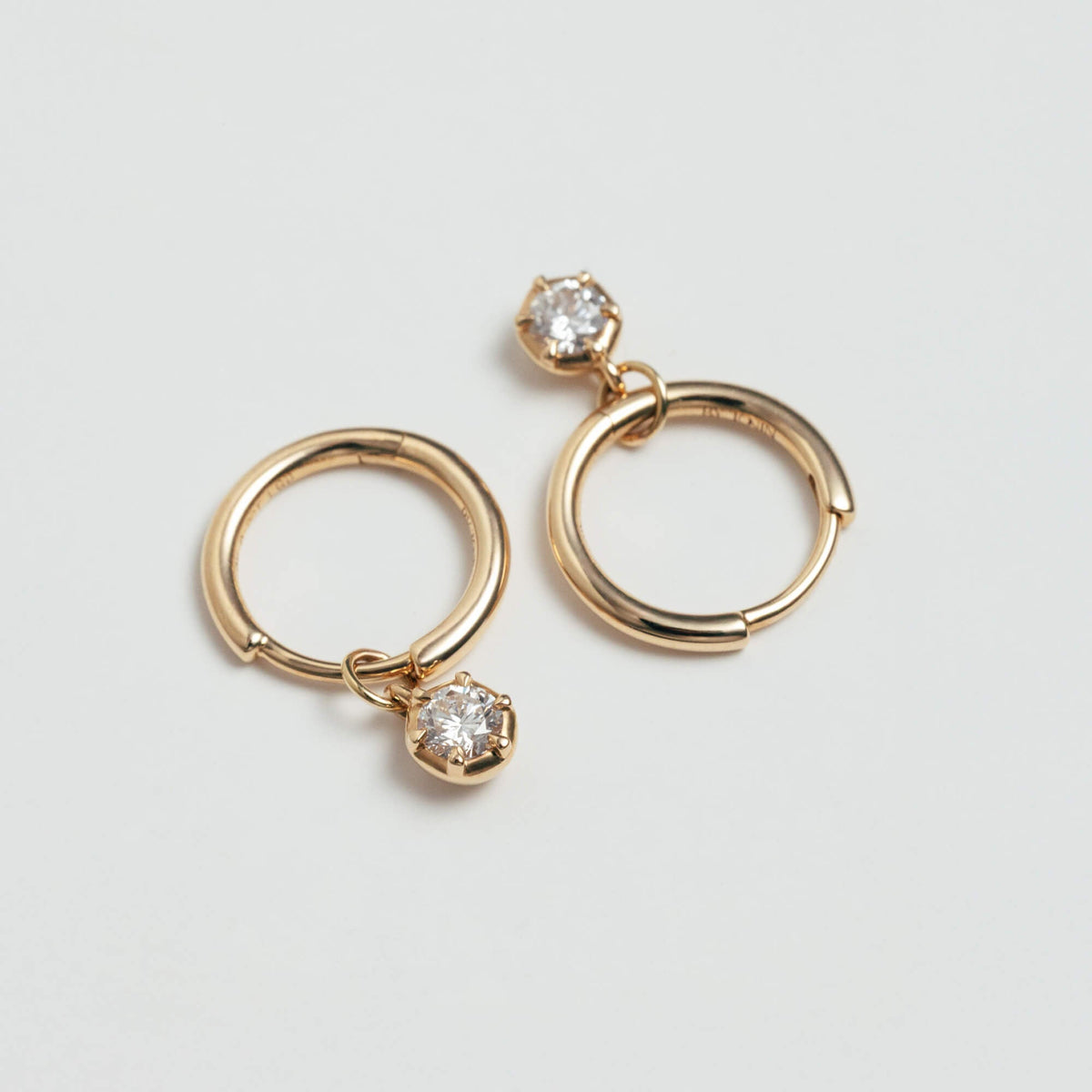
Everything You Need to Know About Lab-Grown Diamonds
Lab-grown diamonds are a practical shift in modern jewellery. As they become more common in New Zealand, having clear information on how they are made, how they hold up over time, and how they compare to earth-mined stones helps you make an informed choice.
Whether you are choosing a piece for daily wear, exploring bridal and wedding jewellery, or selecting a meaningful gift, this guide covers the practical details.
What Is a Lab-Grown Diamond?
A lab-grown diamond is a real diamond made in a laboratory setting. Using specialised technology, heat and pressure conditions are created to mirror how natural diamonds form in the earth.
Chemically, physically, and optically, lab-grown diamonds are identical to earth-mined diamonds. They are pure carbon with the exact same structure, brightness, and durability.
How Are Lab-Grown Diamonds Made?
Lab-grown diamonds are made using two standard methods:
- HPHT (High Pressure High Temperature) Replicates high heat and pressure to form carbon into a diamond crystal. The result is high purity, suitable for clean, minimalist settings.
- CVD (Chemical Vapour Deposition) Uses carbon-rich gas in a vacuum chamber to build diamond layers onto a seed. The result is consistent crystal growth with precise quality control.
Both methods create real, gem-grade diamonds that are cut and polished to reflect light cleanly.
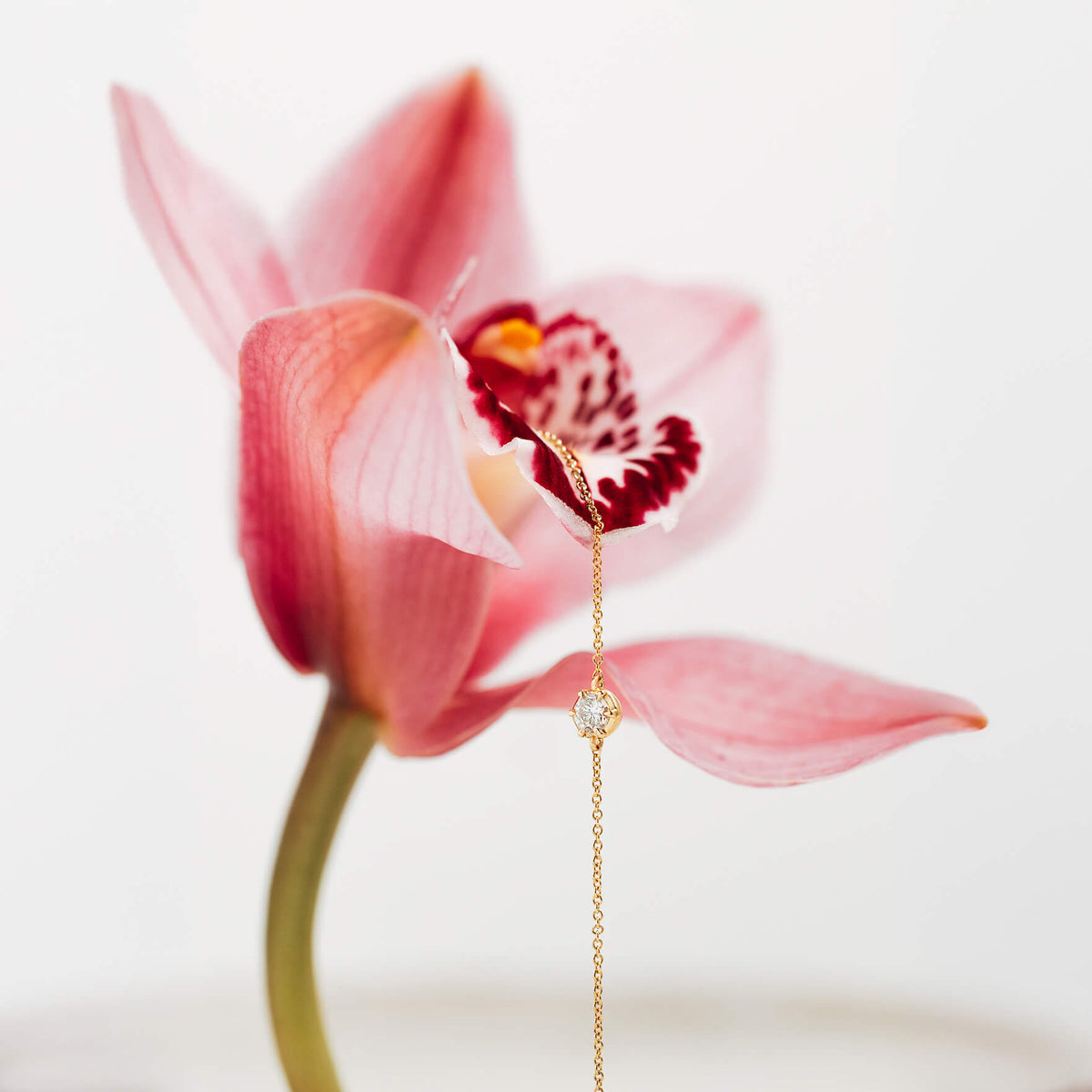
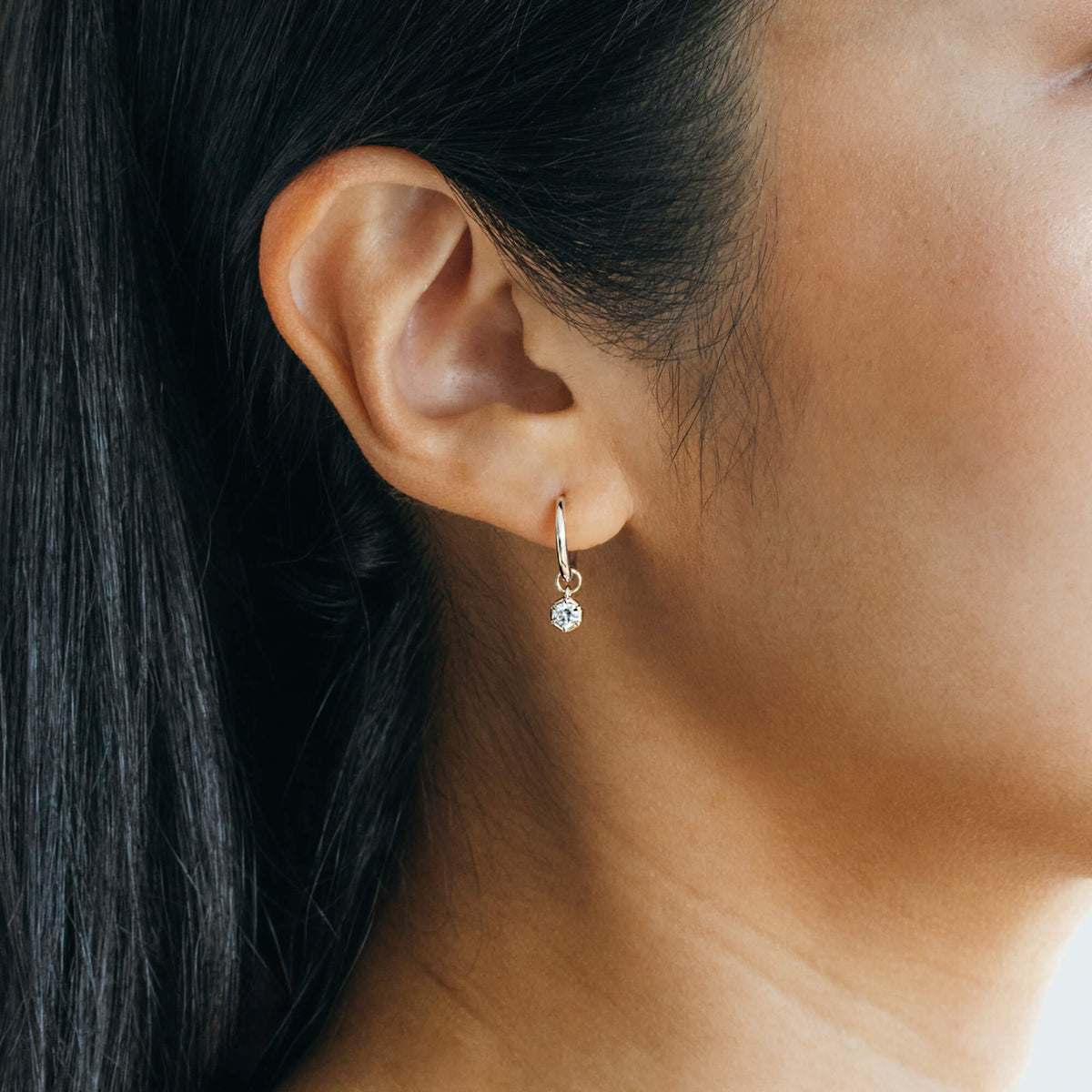
Are Lab-Grown Diamonds Real Diamonds?
Yes. Lab-grown diamonds are real diamonds.
The distinction comes down to lab-grown diamonds versus diamond simulants:
- Diamond Simulants: Made from non-diamond materials such as cubic zirconia or moissanite. They have a different chemical structure, lower hardness, and wear differently over time.
- Lab-Grown Diamonds: Pure carbon with identical properties to natural diamonds. They do not cloud, scratch easily, or dull with daily wear.
Lab-Grown vs. Natural Diamonds: Comparing the Essentials
Choosing between natural and lab-grown stones comes down to origin and personal preference.
Lab-Grown Diamond
- Origin: Created in a lab
- Timeframe: Weeks
- Composition: Pure Carbon (C)
- Mohs Hardness: 10
- Optical Properties: Identical to natural
Natural Diamond
- Origin: Mined from the earth
- Timeframe: Billions of years
- Composition: Pure Carbon (C)
- Mohs Hardness: 10
- Optical Properties: Identical to lab-grown
Can You Tell the Difference By Eye?
No. To the naked eye—and under standard magnification—a lab-grown diamond and a natural diamond look identical. Only specialised lab equipment can identify the trace differences that show how the stone was formed.

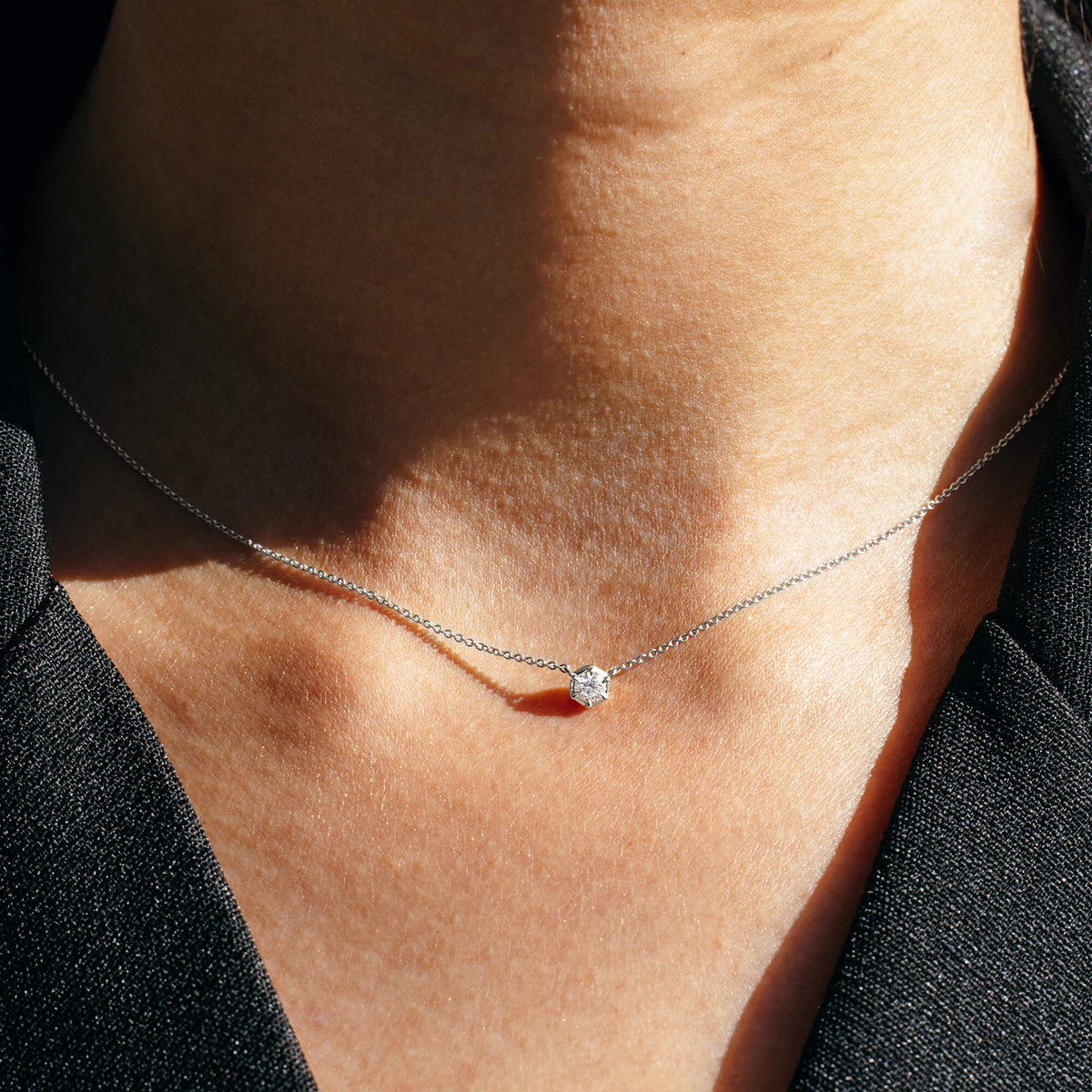
How to tell if a diamond is real or fake:
Because diamond simulants like cubic zirconia or moissanite have different chemical structures, they behave differently in daily conditions:
- The Fog Test: Breathe warm air onto the stone. Real diamonds disperse heat instantly and clear up immediately, while simulants remain fogged for a few seconds.
- Refinement & Sparkle: Simulants often create rainbow flashes of light (high dispersion), whereas real diamonds reflect white light and subtle grey contrast.
- Wear & Weight: Over time, simulants scratch easily and lose clarity along their facets, whereas a diamond maintains its surface smooth and unchanged.
How Are Lab-Grown Diamonds Graded?
Lab-grown diamonds are graded using the standard 4Cs:
- Cut: Controls how light moves through the stone.
- Colour: Graded on a scale from D (colourless) to Z.
- Clarity: Measures natural internal characteristics (inclusions).
- Carat Weight: The physical weight of the stone.
For simple essential diamond pieces, a clean cut matters most for how the stone catches light.


Frequently Asked Questions
Do lab-grown diamonds cloud over time?
No. Because lab-grown diamonds have the same chemical makeup and 10/10 hardness as natural diamonds, they will not cloud, fade, or discolour over time. See our Product Care Guide for simple ways to clean your jewellery.
Are lab-grown diamonds suitable for everyday wear?
Yes. Their hardness makes them ideal for daily wear, sitting naturally alongside 925 sterling silver pieces or gold-plated earrings.
How do I care for lab-grown diamond jewellery?
Clean your pieces with warm water, mild soap, and a soft brush. Store them separately in a fabric pouch to protect the metal settings from scratches.
Finding the Right Piece for Your Collection
Choosing between a lab-grown or natural diamond comes down to personal preference and how you intend to wear it. Lab-grown diamonds offer a practical way to wear fine jewellery every day without compromising on strength or clarity.
Explore our Essential Diamond Collection or view pieces made for daily rotation in our Bestsellers Edit.
